
Understanding Sussex County Releases
A Sussex County release means that one custodian ended a particular confinement event. It does not always mean the person entered the community. A bond release ends local pretrial detention while the case continues. Time served or sentence completion reflects the end of confinement ordered in that matter. A transfer removes someone from one facility but places the person with another jail, VADOC, a federal authority, or ICE. Parole is conditional community release from an eligible prison sentence. Probation is court-ordered community supervision that may begin instead of confinement or after it.
The source must match the custody system. The Sussex County Sheriff’s Department is the first contact for a Sussex arrest and local booking record, although its official pages do not establish where every detainee is physically housed. Sussex I is an active VADOC prison for sentenced state prisoners. Sussex II is a closed former VADOC prison. Neither prison is a county jail merely because it stands in Sussex County. A local record, state release document, and federal locator result cannot be used as substitutes for one another.
- Release
- The end of custody by one named authority.
- Transfer
- Movement to another custodian without community release.
- Discharge
- Completion of a sentence or supervision obligation.
- Detainer
- A request or order that can send a person to another authority when present custody ends.
Sussex County Release Types
Release entries need precise labels because the listed outcome determines what to check next. A court may authorize bond, dismiss a charge, or impose a time-served sentence, but the jailer records when physical processing ends. Another warrant, consecutive sentence, or detainer can prevent community release even after one case has ended. Death and escape can also end a live roster entry, yet neither is an ordinary release to the community.
| Recorded event | What it means | Best confirmation |
|---|---|---|
| Bond or recognizance | Pretrial custody ends; the case remains active | Court order plus Sheriff release time |
| Time served or completion | Confinement in the named matter is satisfied | Final order and release entry |
| Parole or probation | Community supervision may continue | VADOC documents and district status |
| Transfer or detainer | Custody moves to another authority | Destination field and receiving system |
| Dismissal or acquittal | A judicial result, not an exact exit time | Court disposition and jail record |
Important: A person who left a Sussex holding location for another institution is not confirmed as released until the receiving authority later records a community release or discharge.
Sussex Release Record Fields
The durable local evidence is a cumulative booking and release register entry, an incarceration record, or another existing record maintained by the custodian. Sussex does not publish a public field schema, so a focused request should ask for fields that identify both the event and its ending. The request can let the Sheriff state which fields are maintained and redact confidential material rather than demanding protected parts of an inmate file.
| Field | What it establishes |
|---|---|
| Name and booking number | Identity of the booking event |
| Receipt date and time | When custody began |
| Charge, court, case | Legal matter tied to custody |
| Bond status | Whether pretrial release was authorized |
| Release date and time | When that custodian ended the event |
| Release type or disposition | Bond, completion, transfer, or other ending |
| Destination and authority | Community exit or receiving custodian |
Virginia Code §53.1-116 requires jailers to keep descriptive and confinement records, but that duty does not make every inmate-file detail public. Routine facts are distinct from medical, classification, security, juvenile, sealed, expunged, and other protected information. The adult initial-intake booking photograph has its own request rule under §2.2-3706(A)(1).
Request Sussex Release Records
Sussex County accepts FOIA requests by mail, fax, email, phone, or in person, and a requester need not use a special form or the phrase “Freedom of Information Act.” A written request creates the clearest trail. Address a local booking request first to the Sussex County Sheriff’s Department, 20212 Thornton Square, Sussex, VA 23884; mail to PO Box 1326, Sussex, VA 23884; phone 434-246-5000; fax 434-246-5714.
- Give the person’s full name, approximate booking date, and a booking or case number when known.
- Ask for the existing cumulative booking/release entry and releasable booking or incarceration record.
- Name the receipt time, release time, release type, destination, authority, and booking number as requested fields.
- Request existing electronic copies, segregation of exempt details, and an advance cost estimate.
- If the response identifies another custodian, send a narrower follow-up request to that office.
The county FOIA rights page explains the available channels, response framework, and charges. Virginia FOIA generally calls for a response within five working days. A written seven-working-day extension may apply when production is not practical within that time. Sussex may charge actual costs and may require a deposit when an estimate exceeds $200. A response can produce records, cite an exemption, request clarification, give a cost estimate, or invoke the allowed extension.
The official county page visually confirms these routes and rules.

The screenshot supports a narrow existing-record request rather than a demand that the county create a new report.
Sussex Release Record Retention
Online visibility can be brief even when an agency must retain a record. Library of Virginia schedule GS-08 series 100651 covers cumulative booking and release records such as registers, master lists, and automated summaries, with retention for 20 years after separation. Series 100645 covers incarceration records that can include booking sheets, photographs, pretrial-release notices, parole notices, and other release papers, with three years after separation. Both series require confidential destruction.
Retention does not guarantee an online Sussex search result, and it does not erase a lawful exemption. Section 42.1-86.1 also prevents destruction when a retention period remains open or when litigation, audit, investigation, a pending FOIA request, or another listed condition requires preservation. A blank website search should therefore lead to a targeted records request, not a claim that no booking or release occurred.
Virginia’s expanded sealing framework took effect July 1, 2026. Section 2.2-3706.1(J) restricts sealed or expunged law-enforcement records. Juvenile and confidential cases may also be absent. The law effective for the date and event controls, so the record custodian should decide what can be released.
Find Sussex County Released Inmates
Start with the arresting authority and approximate date. Sussex has no official online jail roster, recent-release feed, or public detention arrangement that identifies where every local detainee is held. The safest local sequence combines the Sheriff, Virginia Jail VINE, both Sussex trial-court levels, and a release-register request. No single no-result proves freedom.
- Search Virginia Jail VINE for the named person and note any location or event.
- Call the Sheriff and ask whether Sussex booked the person, which agency became custodian, and whether the terminal event was community release, bond, or transfer.
- Search Virginia adult court records, then inspect Sussex Combined Court and Circuit Court as the case requires.
- Request the local release entry with the exact date, time, type, and destination.
- Follow any transfer into the receiving authority’s locator or records process.
A released person commonly disappears from a live custody view because that view answers who is currently confined. It is not a release archive. Data correction, technical lag, transfer, and movement outside the system’s coverage can produce the same disappearance. For a broader Sussex records request, use the existing register instead of asking the office to research a biography or create a custom narrative.
A missing name is not a release result. Confirm the release type and destination with the custodian that ended the booking.
Sussex VADOC Release Search
The VADOC Inmate and Supervisee Locator applies to people in VADOC institutions, under probation or parole supervision, in institutional hospitals, in certain local or regional jails under VADOC authority, or in a Community Corrections Alternative Program. It is useful after a person leaves prison but remains supervised. It is not advertised as a permanent archive of all fully discharged people, and ordinary Sussex county detainees do not automatically belong in it.
| Search input | Rule |
|---|---|
| First and last name | Full last name plus at least three first-name letters |
| DOC ID | Seven-digit identifier |
| Optional filters | Location, race, gender, and age range |
| Access steps | Accept disclaimer, complete reCAPTCHA, select Locate |
VADOC says the locator updates daily and warns that data may be inaccurate or outdated. The official public description calls the displayed item a “release date.” A future date for someone still confined is a calculation, not proof of exit. A probation or parole district can indicate physical release with continuing supervision. Match the DOC ID and biographical fields before relying on a result.
The official locator screenshot shows the search controls and disclaimer context.
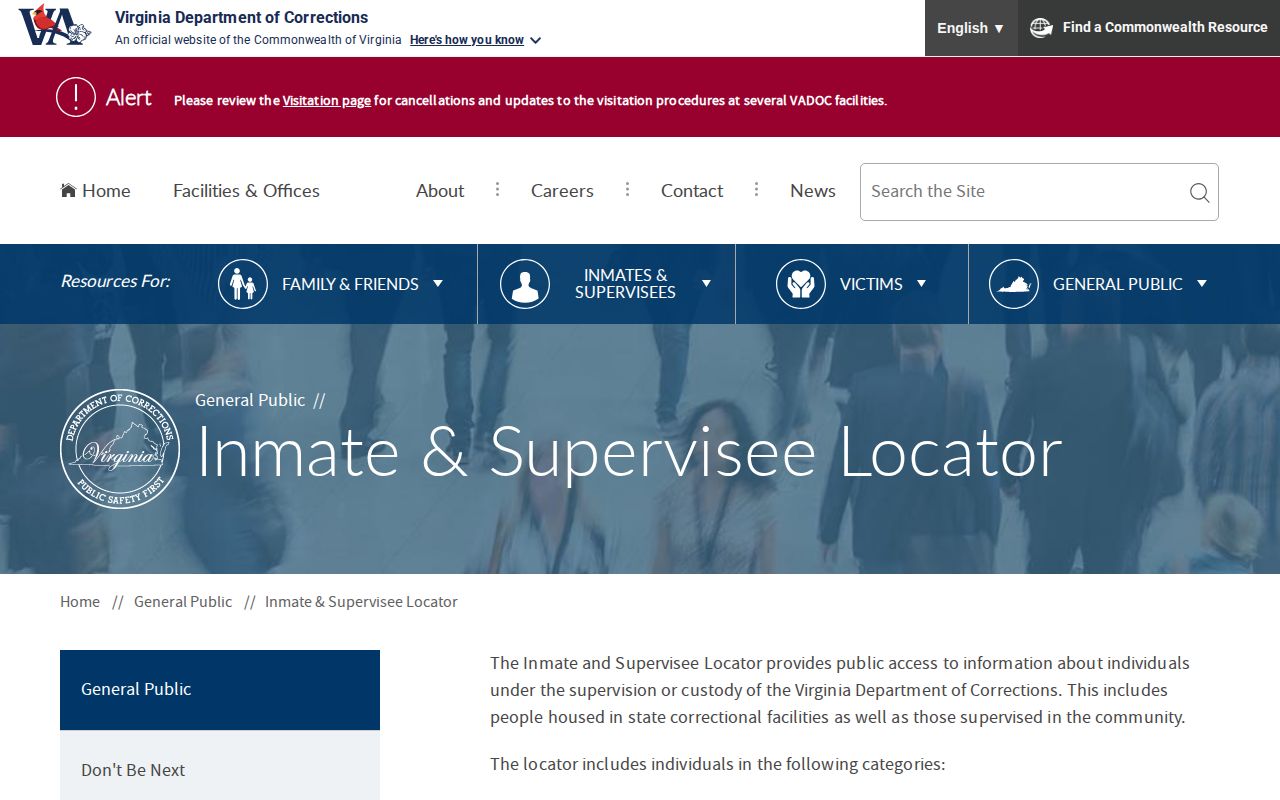
Its daily update and broad custody scope make direct document verification essential for an actual release.
Sussex Court Release Proof
Virginia’s OCIS adult criminal search can show the court, case number, defendant, charge, hearing history, disposition, sentence, and costs. Those facts explain the legal basis for a release, but the docket does not record the exact door-exit time. A bond order can precede processing. A dismissal can coexist with another hold. A sentence can run with or after another case.
The Sussex General and Juvenile and Domestic Relations District Combined Court handles misdemeanors and felony preliminary matters. Its published Monday schedule includes arraignments, bond hearings, criminal trials, and a “Prison Criminal/Civil” docket. Sussex Circuit Court ordinarily contains the final felony disposition after preliminary proceedings. Its official page states that signed final orders are generally handed over or mailed without significant delay beyond mail. Search both levels when a felony moved from District to Circuit.
The Virginia OCIS entry page shows the adult criminal search choices.
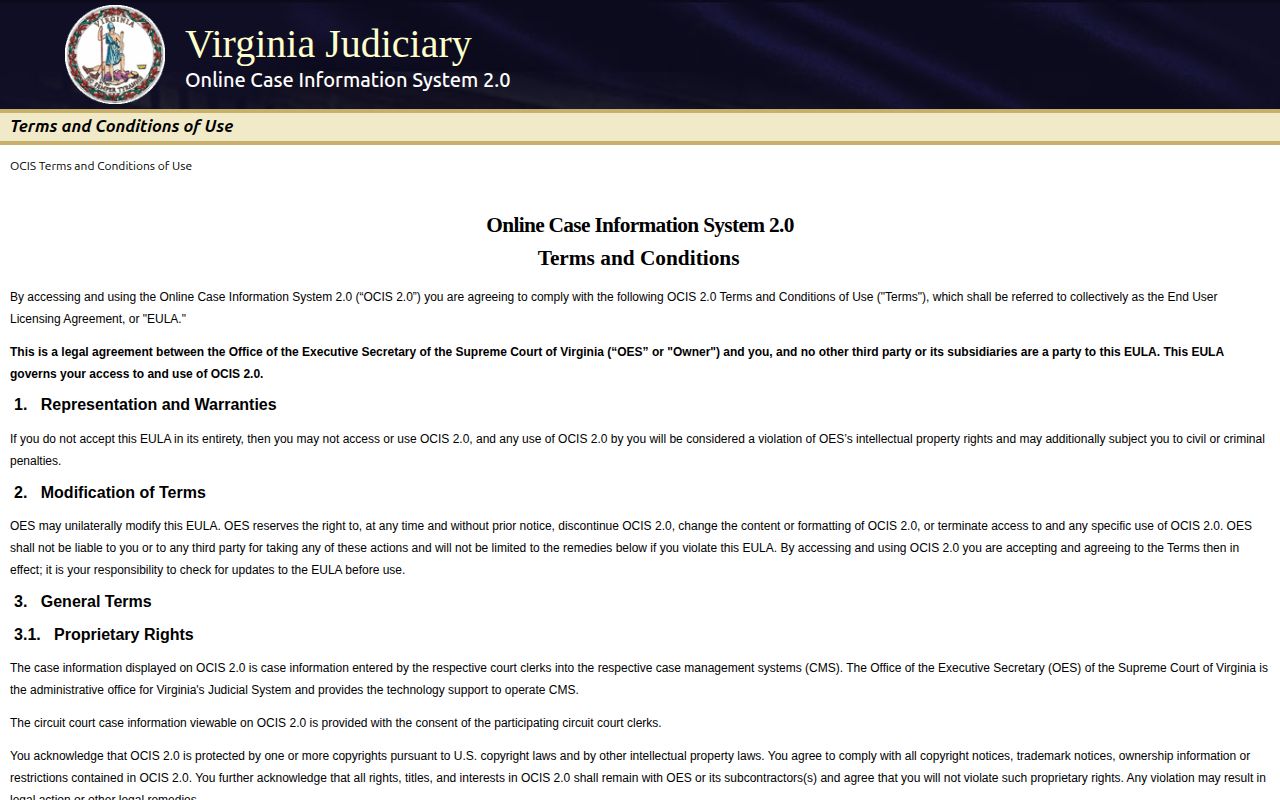
The court result should be paired with the jail or VADOC release record when the exact custody ending matters.
Sussex Recent Release Options
No official Sussex Sheriff 24-hour list, 72-hour list, release archive, roster, booking-photo gallery, inmate lookup, release-date display, or sheriff app link was found on the official site as of the research date. That is an absence of a web channel, not an absence of agency records. Riverside Regional Jail is not a safe substitute because its official member list does not include Sussex.
For an interval search, state exact beginning and ending timestamps and request existing cumulative booking/release register entries for adults recorded as released in that span. Ask for an existing electronic export if the database supports one. If not, request individual entries or narrow the search to a known person. A Sussex 24-hour release request uses this exact time-bounded fallback.
Virginia Jail VINE supports person-specific checking and alerts, not a documented public bulk list. A VINE “release” can reflect transfer, so the event must be checked with the Sheriff or receiving custodian.
When Sussex Releases Are Processed
Sussex publishes no local release time, exit point, weekend procedure, property rule, or family pickup location. The only accurate answer is case-specific confirmation from the Sheriff at 434-246-5000. Ask where the person was held, whether release processing is complete, and whether the outcome is community release or transfer. A magistrate order or court result does not supply an actual exit time.
State-prison procedures must stay separate. VADOC says people discharged or paroled from a state facility are released by 11:59 p.m. on the release date, weather permitting. That statewide rule may apply to Sussex I, not to an undocumented Sussex county-jail arrangement. Signed release paperwork and the receiving supervision or custodial record remain stronger evidence than an expected time.
Note: A stated release date can remain subject to processing, weather, a detainer, or another legal hold.
Getting Home After Sussex Release
No official county-jail transport or public-transit pickup instruction was found for Sussex. Families should not assume that a person will exit at the Sheriff’s listed office or that a ride program is available. Confirm the physical custodian, pickup point, and completed release before traveling. If the person was transferred, contact the receiving institution instead.
VADOC’s documented prison process is different. State records staff arrange approved family pickup or public transportation, and the prison business office can arrange bus travel. Those rules can serve someone leaving Sussex I after an actual state release, but they cannot be presented as Sussex Sheriff policy. The distinction matters because a Sussex arrest and a Sussex I prison sentence belong to different agencies.
Sussex Bond Release Confirmation
The Sussex magistrate at 119 Bank Street in Waverly is available 24 hours at 804-834-2330 and can address the bail-order side of a local case. A bond or recognizance order authorizes release under stated conditions. It does not prove that booking checks, surety, payment, other warrants, or physical release processing have finished.
Pair the judicial record with the Sheriff’s release date and time. Ask whether the person left for the community or was delivered to another authority. The Combined Court record may later show the case’s progress, but bond is not a dismissal, acquittal, or final sentence. The distinction prevents an early court event from being mistaken for the final disposition.
Property After Sussex Release
VADOC’s state-prison release procedure includes return of personal property and remaining release funds. Sussex County publishes no equivalent local-jail instruction. A local requester should ask the actual custodian about property pickup, allowed recipients, identification needs, and any separate appointment. Those details cannot be inferred from Sussex I rules.
Sussex Social Services is located at the Newsome Human Services Building, 20103 Princeton Road, Stony Creek, and can be reached at 434-246-1083. It is a neutral point for navigating documented local services, not a custody database and not an office that corrects a release record. Official release questions still belong with the Sheriff, VADOC, or the court that created the record.
Sussex Prison Release Confusion
Sussex County contains the active Sussex I State Prison and the former Sussex II State Prison. VADOC reported that Sussex II officially closed on June 30, 2024. A record or news item showing someone leaving Sussex II during closure normally describes an institutional transfer. It is not evidence of a mass community release.
Search the statewide VADOC locator for the later location or supervision district, then seek release documents if the person eventually discharged. Someone shown at another prison remains confined. Someone shown at a probation or parole district may have left secure custody but remains supervised. The historical institution name should always be tied to a later receiving or release record.
The official Sussex II closure notice documents the local timeline.
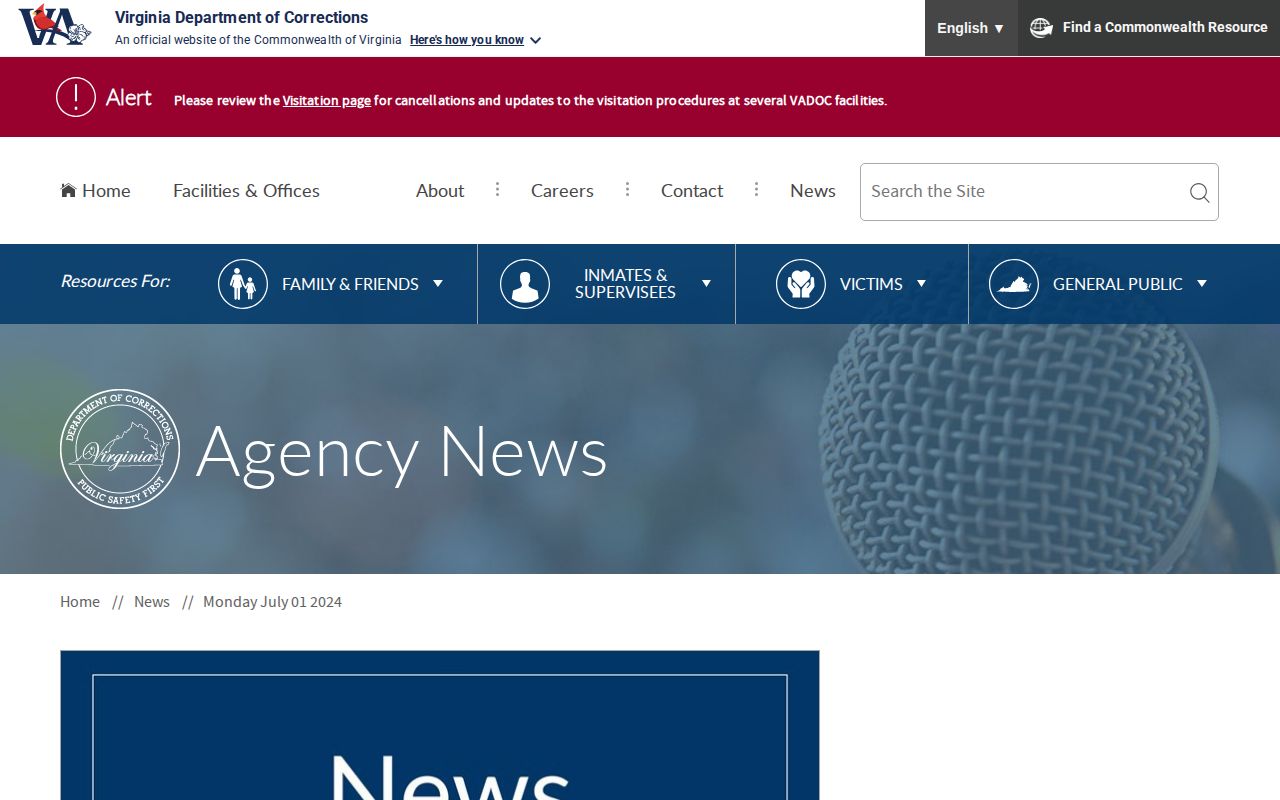
The closure record explains why an old facility departure must be traced into VADOC rather than labeled a release.
Sussex Release Systems Compared
Federal and immigration records remain separate from Sussex and VADOC systems. The BOP locator covers federal records from 1982 forward and accepts federal identifiers or a name with filters. A “Released” or “Not in BOP Custody” result means only that the person is outside BOP custody. The person may be held elsewhere or remain on supervised release. ICE ODLS covers current detainees and people released from ICE custody within the preceding 60 days; its result applies only to ICE.
| Person or event | First source | Best release proof |
|---|---|---|
| Sussex arrest | Sheriff and Virginia Jail VINE | Local release entry with destination |
| VADOC prisoner | VADOC locator | Notification or Order of Release |
| Post-release supervisee | VADOC locator and district | District confirmation or discharge record |
| Federal prisoner | BOP locator | BOP record and receiving-system check |
| Immigration detainee | ICE ODLS | ICE result within its stated coverage |
A person-specific BOP search begins with the official locator.
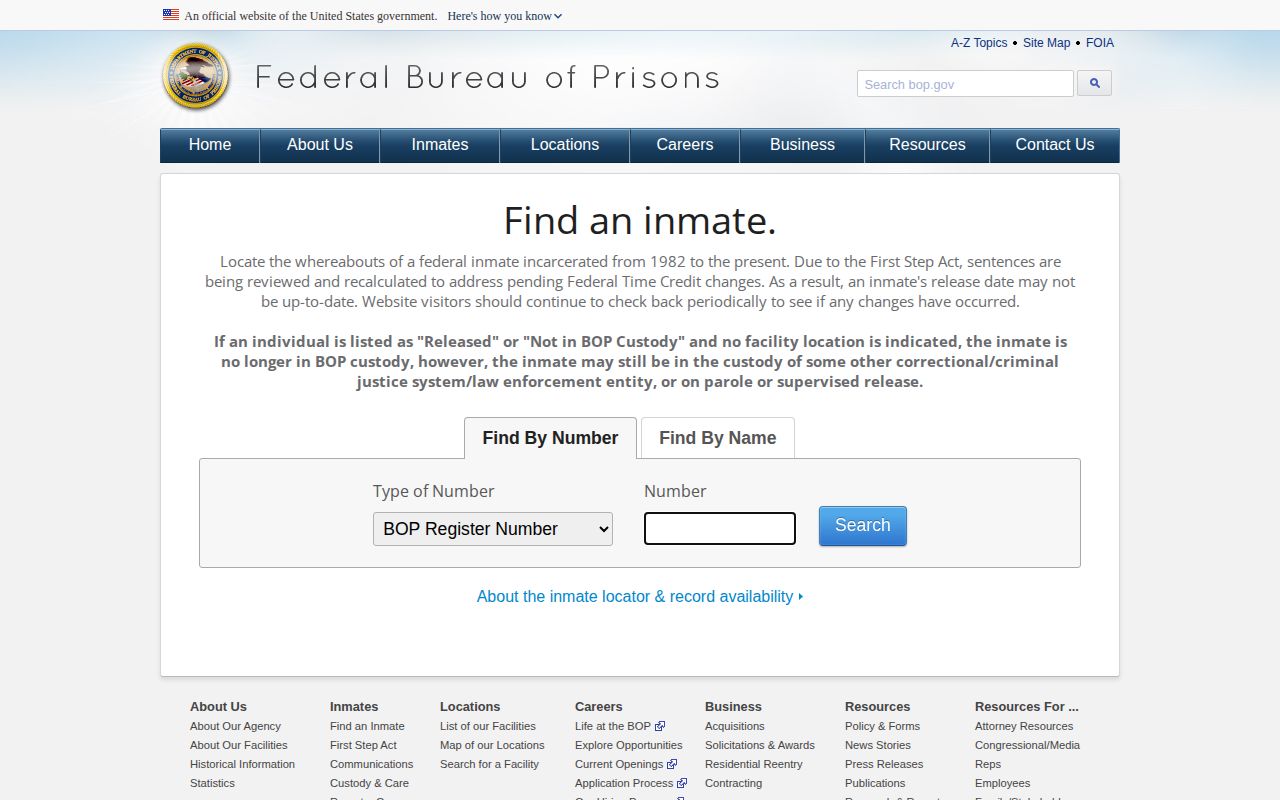
The number and name routes help distinguish federal custody from a Sussex local or Virginia state event.
Sussex Release Facilities
Three Sussex facility entries require different release routes. The Sheriff detention and records function is the local point for a Sussex arrest, but the county does not publish a fixed physical detention arrangement. Sussex I is an active state prison. Sussex II is a closed former state prison whose closure movements were generally transfers.
- Sussex County Sheriff’s Department detention/records function: confirm the actual custodian, local release type, and destination.
- Sussex I State Prison: use the VADOC locator, release documents, and supervision record.
- Sussex II State Prison: trace a historical record to the receiving prison or later discharge.
Riverside Regional Jail is not included because Sussex does not appear on its official member-locality list. It becomes relevant only if a person-specific court, Sheriff, VINE, or transfer record names it as the custodian.